Silicone seals for ventilators and pumps
Ventilators and infusion pumps run continuously for days, requiring seals with high fatigue resistance and stable airtightness. Medical silicone seals meet these requirements thanks to their high elasticity, low compression set and resistance to repeated disinfection.
A failed seal can cause gas leaks or pressure and flow deviations, directly affecting patient safety. That is why seal materials and design deserve attention right from the product development stage.
Operating conditions for seals in critical care equipment
In ventilators, seals in the exhalation valve, humidifier chamber and breathing circuit connectors are exposed to humid gas, high-concentration oxygen and temperatures of up to 40–60°C. In infusion pumps, seals and pump membranes undergo millions of compression cycles per month. These parts are also wiped or autoclaved for disinfection on a regular basis.
Why choose silicone
- Low compression set, retaining sealing force over long periods.
- Compatible with oxygen and does not age as quickly as natural rubber.
- Withstands 134°C autoclave sterilization and common disinfectant chemicals.
- Meets ISO 10993 and USP Class VI biocompatibility standards.
| Parameter | Medical LSR silicone | EPDM rubber | NBR rubber |
|---|---|---|---|
| Operating temperature range | -50 to 200°C | -40 to 130°C | -30 to 100°C |
| Compression set (22 hours, 175°C) | 10–20% | 25–40% | Not suitable |
| Oxygen compatibility | Good | Good | Moderate |
| Repeated autoclave sterilization | Excellent | Good | Poor |
| Biocompatibility certification | Common | Limited | Limited |
Seal design and fabrication
Hardness and compression ratio
Static seals typically use 40–60 Shore A silicone with a compression ratio of 15–30%. Valve membranes and pump membranes require lower hardness to respond quickly to small pressure differences.
LSR injection molding
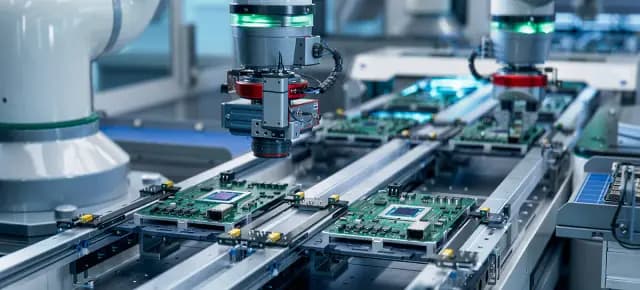
Automated LSR injection molding delivers tight dimensional tolerances, flash-free parts and production in a clean environment, making it suitable for complex seal geometries and high volumes.
Durability testing
Cyclic fatigue testing, leak testing after repeated autoclave cycles and accelerated aging should be carried out to predict service life and determine the recommended replacement interval for users.
Silicone seal surfaces can be slightly tacky, causing valves to stick or attracting dust. A slip coating surface treatment or a self-lubricating LSR grade makes assembly easier and valve movement smoother.
AMS supplies medical-grade LSR and HCR silicone from Shin-Etsu and Dow for seal production. Contact AMS Vietnam for material advice and samples.