Die attach adhesives for power packages
High thermal conductivity die attach adhesives help power chips such as MOSFETs, IGBTs and high-power LED chips quickly dissipate heat into the substrate, while maintaining a durable bond through thousands of thermal cycles over the product's lifetime.
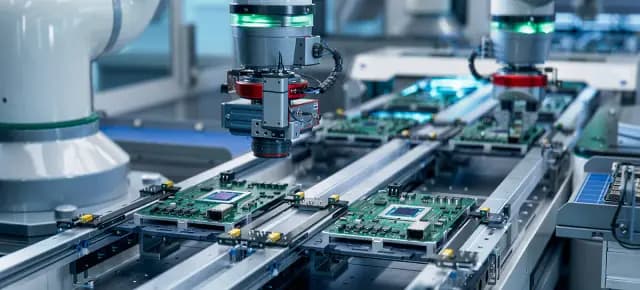
Die attach is the step of mounting a semiconductor chip onto a lead frame or substrate. For power chips, this bond layer not only holds the chip but is also the main heat dissipation path. If the thermal resistance of the adhesive layer is high, the chip's junction temperature rises, reducing performance and lifespan.
The continuous on-off cycling of inverters, chargers and LED lights causes the die attach layer to expand and contract millions of times, so fatigue resistance is just as important as initial thermal conductivity.
Common die attach technologies
Silver-filled epoxy adhesive
Easy to use, curing at 150–175°C, with thermal conductivity of 2–30 W/m·K depending on silver content. Suitable for medium-power chips and LEDs.
Sintered silver
Nano or micro silver particles are sintered at 200–250°C, forming a nearly pure silver layer with thermal conductivity above 100 W/m·K. Suitable for SiC and GaN power modules for electric vehicles.
Soft soldering
Traditional lead-free tin solder conducts heat well but suffers thermal fatigue under high-temperature cycling.
Property comparison
| Property | Silver epoxy | Sintered silver | SAC solder |
|---|---|---|---|
| Thermal conductivity (W/m·K) | 2–30 | 100–250 | 50–60 |
| Maximum operating temperature | 150–175°C | Above 250°C | About 150°C |
| Thermal cycling durability | Good | Very good | Moderate |
| Cost | Low | High | Low |
Quality control of the die attach layer
- Uniform bond line thickness of 15–40 microns, controlled by die placement force.
- Voids below 5% of the area, inspected by X-ray.
- Die tilt below 10 microns between the two edges.
- Die shear testing per MIL-STD-883.
Voids are the number one enemy because they create local hot spots. Curing in a nitrogen atmosphere, using a cure profile with a dwell stage and choosing an adhesive with low volatile content significantly reduce voids.
When choosing between silver epoxy and sintered silver, plants should calculate the total cost of ownership, including sintering press equipment, silver or gold plating requirements on the substrate and yield. For modules used in electric vehicles and renewable energy, the higher cost of sintered silver is usually offset by a longer service life.
AMS supplies die attach adhesives from leading manufacturers to semiconductor packaging and power module plants. Contact AMS Vietnam for advice and trial samples.