Potting compounds protecting LED drivers
Outdoor LED drivers must withstand rain, sun, high humidity and constant vibration. Potting compound fully encapsulates the circuit board, protecting against moisture and vibration and helping conduct heat from components to the housing, allowing the driver to achieve IP65–IP67 protection and a longer service life.
For street lights, floodlights and LED signage, driver failure is the leading cause of entire fixtures going dark. Choosing the right potting compound is an effective way to reduce warranty rates.
Common potting systems
There are three main systems for LED drivers, differing in hardness, heat resistance and cost:
- Two-part silicone: elastic, heat resistant up to 200°C, low stress on components, suitable for high-power drivers.
- Polyurethane: moderately soft, good adhesion, reasonable cost, operating up to about 120°C.
- Epoxy: hard, with good impact and tamper resistance but high stress, requiring care with ceramic capacitors and inductors.
Thermal conductivity: an often overlooked factor
Standard potting compounds have a thermal conductivity of only about 0.2 W/m·K. For drivers above 100 W, choose a ceramic-filled compound rated at 0.6–1.2 W/m·K so heat from the transformer and MOSFETs can escape to the aluminum housing. Lowering capacitor temperature by 10°C can double capacitor life.
Many customers focus only on water resistance and forget that potting compound is also a heat path. After switching to a suitable thermally conductive compound, the temperature of electrolytic capacitors in the driver usually drops noticeably without any design changes.
Application Engineer, AMS Vietnam
A quality potting process
- Bake the board and housing to remove moisture before potting.
- Stir part A with fillers thoroughly, as the fillers can settle during storage.
- Mix at the correct ratio using a metering machine or a precision scale.
- Degas the mixture under vacuum or pot in a vacuum chamber to avoid air bubbles.
- Cure at the recommended temperature and avoid heating too quickly, which can cause cracking.
Inspection after curing
Check Shore hardness, confirm the surface is tack-free and periodically section samples to check for bubbles to ensure a stable process.
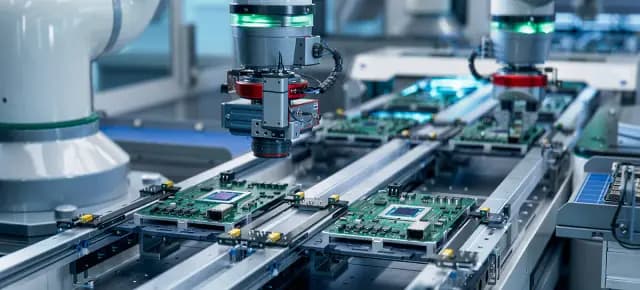
For high-volume drivers, two-component meter-mix machines with static mixing heads deliver accurate ratios, reduce waste from hand mixing and shorten potting time. On smaller lines, you can start with dual-cartridge packaged compounds and a dispensing gun to ensure consistent quality from the start.
AMS supplies silicone, PU and epoxy potting compounds from Dow and Henkel, along with advice on metering equipment. Contact AMS Vietnam to trial samples for your LED driver.